
- Home
- Articles
Refine by
Environmental Industry Articles & Analysis: Today
14 articles found

The global plastic waste crisis is worsening at an alarming rate—each year, over 360 million tons of plastic is produced worldwide, yet only 9% is effectively recycled, according to recent statistics. A staggering 79% ends up in landfills, oceans, or natural environments, polluting ecosystems and threatening sustainable development. Traditional mechanical recycling, which relies on melting ...
The University of Nebraska-Omaha operates one of the state’s few programs dedicated to supply chains. Steve Schulz, Ph.D., Associate Professor of Logistics & Supply Chain Management, said the program focuses on all the latest innovations regarding supply chain technology. ...
Temperatures Drop. Moisture Rises. Chutes Plug. According to Sukup Manufacturing, a plugged bin or chute costs one facility $50,000 a day in lost production and labor. In mining, blocked chutes are responsible for about 60% of conveyor-related accidents, per the Australian Mine Safety Journal. ...
Workforce shortages in the U.S. have sparked great energy toward technology. The urgency to implement automated work processes continues to ...
As bulk material management continues its digital transformation, industries are turning to sensors and weighing systems to eliminate manual measurements and streamline production. However, when accuracy is insufficient, operators face major obstacles: financial disparities, underutilized storage capacity, frequent downtime, and weak ...
Organizations face a storm of challenges: the strain of product demand, limited supply chain resources, and an unprecedented exodus of people leaving the workforce. Thankfully, Industry 4.0 technology and systems provide some ...
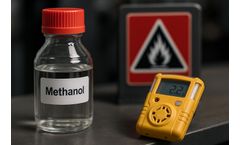
Methanol is increasingly attractive as a maritime fuel, offering significant reductions in NOx, SOx, and particulate emissions. With established infrastructure and ease of handling, it provides a practical pathway toward cleaner shipping.However, methanol introduces safety considerations. It is a highly flammable liquid with toxic properties, and its vapours can accumulate to create hazardous ...

Urban planning increasingly treats air quality as an infrastructure input, leveraging multi-source data to reduce exposure, bolster resilience, and guide investment in healthier, more equitable cities.Key data types and their valuePollutant concentration data: monitoring commonly tracked pollutants include PM2.5, PM10, NO2, O3, SO2, and CO. PM2.5 is particularly problematic due to its deep lung ...

Taste and odor in drinking water are persistent consumer concerns for utilities. They are driven by geosmin and MIB, naturally occurring compounds produced by algae in source water reservoirs. While not health hazards at typical concentrations, their sensory impact drives complaints and erodes trust, and conventional treatment often cannot fully remove them. Utilities are increasingly shifting to ...
Inventory mistakes are amplified when errors accumulate and impact corporate financial statements. Storing inventory that you cannot see—such as in bins and silos—can be particularly risky if manual measurements and estimations are the basis for calculating inventory value. Bulk solid inventory is handled in several ...
The cost of storing materials—along with related salaries, transportation, handling, taxes, insurance, depreciation, and shrinkage—could add up to 10-30% of total inventory costs, according to Investopedia. ...
Today's cloud-based programs are compatible with a wide range of sensors and measurement technologies. Their versatility lends them to be used with bins, tanks, or silos of different shapes and sizes, storing all types of grain, ingredients, or ...
Measure Volume in a Wedge or Pie-Shape Silo For operators, having accurate data about the amount and dollar value of material on hand can help reduce safety stock, increase inventory turns, and pay for itself by freeing up spend that could be tied up in inventory. Operations that manage inventory in pie-shaped silo segments now have a solution that provides accurate volume data thanks to the ...
Not long ago, bulk material management involved dirty clipboards and measuring tapes to track grain, plastic, or cement inventory stored in a bin or silo. Enter digital transformation. Organizations continue to embrace digital transformation to replace antiquated processes using high-tech instruments like BinMaster level sensors and accompanying software. ...