

Opgal Optronic Industries Ltd (OPGAL) articles
The energy sector faces escalating regulatory scrutiny and mounting operational complexity. Traditional LDAR relies on labor-intensive, periodic manual monitoring, creating gaps in fugitive methane management. This shift toward fixed Optical Gas Imaging (OGI) technology augmented by Artificial Intelligence (AI) enables autonomous, continuous vigilance, establishing an unblinking safety architecture for real-time detection with reduced false alarms and improved compliance in petrochemical and
The global energy sector is undergoing a regulatory shift that makes high-precision methane quantification mandatory rather than voluntary. With EPA OOOOb and OOOOc finalized and EU methane regulations advancing, operators must rely on Optical Gas Imaging to meet compliance obligations and demonstrate verifiable emissions data.
The Regulatory Shift: From NSPS OOOOa to the OOOOb/c Era
For nearly a decade NSPS OOOOa served as the primary framework for the oil and natural gas indus

Leak detection in industrial environments rarely relies on a single technology. Most mature inspection programs are built around layered detection strategies, where different tools support one another depending on the type of leak, operating conditions, and inspection goals.
Within this framework, the
OGI, short for Optical Gas Imaging, has become one of the most influential technologies in industrial gas detection. What started as a visual inspection method has evolved into a core capability for safety, emissions control, and regulatory compliance across multiple industries.
Today, OGI is no longer viewed as a standalone camera technique. It is increasingly embedded within broader monitoring architect
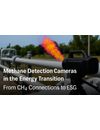
Introduction: Why OGI Systems Are Becoming an Industry Standard
Industrial gas detection is undergoing a fundamental shift. As safety, environmental accountability, and regulatory oversight continue to intensify, operators are moving away from isolated measurement tools toward integrated detection platforms. OGI systems represent this evolution by combining optical gas imaging with intelligent data workflows that support continuous moni
How Artificial Intelligence Is Reshaping Emissions Monitoring and Reporting
Introduction: Why EPA AI Is Becoming a Regulatory Turning Point
The integration of EPA AI into environmental regulation marks a significant shift in how methane emissions are monitored, analyzed, and reported across the energy and industrial sectors. As methane regulations grow more complex and enforcement becomes more data driven, artif
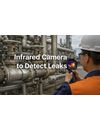
Leak detection has become a critical priority across industrial sectors, from energy and power generation to chemical processing and manufacturing. Even small, undetected leaks can lead to safety hazards, energy loss, environmental damage, and regulatory exposure. Traditional inspection methods often rely on point sensors, manual checks, or pressure testing, which may miss hidden or intermittent issues.
An infrared camera to detect leaks offers a funda

The EPA continues to accelerate its methane reduction strategy by tightening performance standards across the petroleum and natural gas sector. Two major components of this regulatory shift are OOOOb and OOOOc, each addressing different stages of industry activity. While operators are becoming familiar with the OOOOb summary that outlines requirements for new, modified, and reconstructed sources, the next challenge is understanding OOOOc, which applies to exist
Optical gas imaging continues to evolve as industries demand higher sensitivity, greater reliability, and stronger field performance for methane and VOC detection. Among the technologies contributing to these advancements is Sierra Optical, a class of high precision optical components engineered for superior infrared transmission, stability, and spectral accuracy.
As OGI systems grow more sophisticated, the quality of th