
Logo Environmental XPRT
Companies
Products
Services
Software
Training
Applications
Sign in
List your business

Advertising options
  1. Home
  2. Applications
  3. air climate
Show results for
Products
Services
Software
Training
Applications

Companies

News
Articles
Books
Magazines
Events
Downloads
Videos

Refine by
Locations

  • USA
  • Canada
  • Europe

  • Asia & Middle East
  • Australasia
  • Latin America
  • North America
Industries served

  • textile

Air Climate Product Applications For The Textile Industry
15 applications found

Water Quality Management Instruments for Textiles Industry
Premium

Water Quality Management Instruments for Textiles Industry

The textile manufacturing industry encompasses many and diverse processes that rely heavily on the use of water, energy, chemicals, and other resources. Wet spinning, sizing, desizing, scouring, bleaching, mercerization, dyeing and printing are just a few. Monitoring and controlling the pH, TDS/Conductivity/Salt Concentration, ORP (REDOX), and Temperature of the aqueous solutions used in these processes conserves costly resources, controls quality, and reduces the amount of pollution that must be treated before ...

ByMyron L Company  based in  Carlsbad, CALIFORNIA (USA)

Filter for P.T.A. / C.T.A. Silo Vent Emissions in Polyester Fibre Production

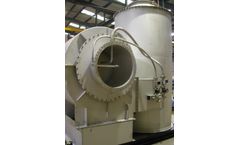
Filter for P.T.A. / C.T.A. Silo Vent Emissions in Polyester Fibre Production

PROCESS INFORMATION: In a plant making Terephthalic Acid (a constituent for the production of Polyester fibres) the silos or hoppers which are filled by mechanical or pneumatic conveying of the material. Raw material (C.T.A.) feed silos in the preparation section empty into the mixing process, and finished product (P.T.A.) silos are discharged to bagging stations. The filling and emptying of these silos generated vent gas which has to be treated before going to ...

ByBegg Cousland Envirotec Limited  based in  Glasgow, UNITED KINGDOM

Water and Wastewater Treatment Systems for Textile

Water and Wastewater Treatment Systems for Textile

Textile industries are water-intensive and large amounts of water are used in textile manufacturing processes. Almost all dyes and chemicals are applied to textiles in water baths. Preparation steps such as desizing, washing, bleaching and mercerizing generally use aqueous systems. The importance of water in textiles is noted by the textile industries in India and China, their use of local water supply, and the mixing of untreated wastewater, which is composed of fats, oils, colors and other chemicals added in a ...

ByZetaş Kimya  based in  Ostim OSB/Yenimahalle, TURKEY


Spacer fabric for automotive textiles industry

Spacer fabric for automotive textiles industry

3mesh spacer fabric guarantees perfect air distribution – even under pressure. In addition the perfect adjustment to every contour increases the comfort. Therefore 3mesh is used everywhere, where perfect comfort or soft touch is requested: in climatic and ventilated seats, seat covers, head liners, instrument and door panels as well as in composite constructions and invisible airbag ...

ByMüller Textil GmbH  based in  Wiehl Drabenderhöhe, GERMANY


Elemental Analysis for Woven & Nonwoven Fabrics by EDXRF / XRF

Elemental Analysis for Woven & Nonwoven Fabrics by EDXRF / XRF

Fabrics fall into two broad categories wovens and nonwovens. A woven is a cloth formed by weaving. Wovens only stretch in the bias directions unless the threads are elastic. Nonwoven fabrics are broadly defined as sheet or web structures bonded together by entangling fiber or filaments created by mechanical, thermal, or chemical ...

ByApplied Rigaku Technologies  based in  Cedar Park, TEXAS (USA)

Cleaners for Textiles industry

Cleaners for Textiles industry

There are many cleaning applications in textile manufacturing and industrial textile laundering. In textile factories, manufacturing equipment, accessories, water recycling system filters, and wastewater filters must all be cleaned and maintained in order to keep the plant running efficiently. Minimizing downtime, by using the safest, most economical and environmentally friendly products that clean effectively, is critical. Returning filter system flux rates back to 100% is also important and can be accomplished ...

ByInternational Products Corporation  based in  Burlington, NEW JERSEY (USA)

Effluent filtration in textile industry

Effluent filtration in textile industry

To separate solids from liquids, nonwoven or woven fabrics out of animal or vegetable fibers are used, and synthetic fibers are now in use since several decades. In cross-flow filtration the filtrate is recuperated transversely to flow direction through a porous wall layer. In classic filtration, a filter cake is built up on filter surface and this cake reduce the flow of filtrate which will depend of the cake permeability. Often it needs such a cake structure build-up in order to obtain a clear filtrate. The ...

ByBucher Unipektin AG  based in  Niederweningen, SWITZERLAND
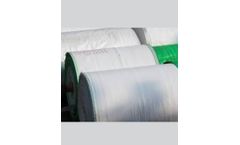

Standard & Anti Slip Fabric for Textile Wrapping

Standard & Anti Slip Fabric for Textile Wrapping

Our textile wrapping solutions are engineered to maintain the integrity of fabric rolls throughout storage and shipment. From preventing dust and moisture to supporting smooth handling, these wraps ensure your textiles reach their destination in pristine ...

ByAura PolyPlastics Pvt. Ltd.  based in  Hyderabad, INDIA


Air pollution control solution for textile/carpet industry

Air pollution control solution for textile/carpet industry

The textile industry typically produces an oil mist haze that creates a visible plume from the stack. The haze comes from the oils, surfactants, and chemicals used in the manufacturing process as well as from machinery oil. Many facilities employ a scrubber or an oxidizer to remove the ...

ByCR Clean Air Group, LLC  based in  Parsippany, NEW JERSEY (USA)


Air pollution control for the textiles industry

Air pollution control for the textiles industry

Companies that use solvent based inks, dies, or coatings in the textile manufacturing process – commonly incorporate from filtration systems in the control ...

ByCatalytic Products International (CPI)  based in  Lake Zurich, ILLINOIS (USA)


Applications and Air Pollutants Removed in the Textile Industry

Applications and Air Pollutants Removed in the Textile Industry

Remove oil mists and blue haze from tenter frame ...

ByBionomic Industries Inc  based in  Mahwah, NEW JERSEY (USA)


Evaporating and drying equipments for textile sludge applications

Evaporating and drying equipments for textile sludge applications

The main process units include: industrial park sewage treatment, pending sludge drying reduction, dry sludge Utilization of blending by thermal power plant, industrial park production heat supply, dryer heat source recycle and reuse as well as other process, which formed an industrial chain that has the characteristics of circular economy and can be replicated and promoted, known as Sludge Treatment Demonstration Base in FOSHAN city. This project was rated as "Excellent Case of Chinese Sludge Treatment and ...

ByGuangzhou Shincci Energy Equipment Co., Ltd.  based in  Guangzhou, CHINA

Compressed air and industrial gases solutions for textile industry

Compressed air and industrial gases solutions for textile industry

Energy savings solutions in the Textile industry. In almost all stages of the manufacturing process, compressed air is required in textile factories to create those beautiful and colourful fabrics. Especially in the cotton textile industry with air-jet looms, as well as in the polyester yarn industry, large volumes of air are required. The compressed air consumption in the textile industry is increasing due to modernisation of the production process. It is used in almost all machines for both operations as ...

ByVPInstruments  based in  Delft, NETHERLANDS
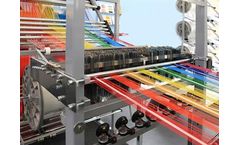

Industrial manufacturing solutions for the textile mills industry

Industrial manufacturing solutions for the textile mills industry

The textile mills industry includes man-made fiber mills and wool woven fabric mills, carpet and rugs, yarn-spinning mills, non-woven fabric facilities, and tire cord and fabric facilities. These businesses require provide proven emission control solutions, including mist elimination and odor ...

ByCECO Environmental  based in  Addison, TEXAS (USA)
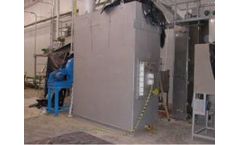

Filter for Nylon Yarn Texturizing Emissions

Filter for Nylon Yarn Texturizing Emissions

PROCESS INFORMATION: In the production of Nylon filaments, polymer is melted and then pumped through a sand filter to a spinnerette. The filaments formed by the spinerette are cooled and solidified by air, before going to a humidifying chamber to stabilise the length of the spun polymer. The yarn filaments are then lubricated by a finishing agent and then stretched or ‘drawn’ to a desired diameter before being wound onto a ...

ByBegg Cousland Envirotec Limited  based in  Glasgow, UNITED KINGDOM

  • Previous
  • Next
Need help finding the right suppliers?Try XPRT Sourcing. Let the XPRTs do the work for you
Back to top
About Environmental XPRT

Environmental XPRT is a global environmental industry marketplace and information resource. Online product catalogs, news, articles, events, publications & more.

Channels

Solutions

  • Environmental Equipment & Supplies
  • Environmental Software
  • Environmental Training Courses
  • Environmental Industry Services
  • Environmental Product Applications

Latest

  • Environmental Industry News
  • Environmental Industry Events

Publications

  • Environmental Industry Articles & Case Studies
  • Environmental Industry Books and Publications
  • Environmental Industry Journals and Magazines
  • Environmental Industry Downloads
  • Environmental Industry Videos

Companies

  • Environmental Industry Suppliers & Manufacturers

  • FAQs
  • Company sitemap
  • Category sitemap
Environmental XPRT is part of XPRT Media All Rights Reserved.
Terms
Privacy
  • Environmental XPRT RSS List
Our sites:
Agriculture XPRT
Energy XPRT
Medical XPRT
XPRT