
Fluence Corporation
12 Applications found

Fluence Corporation applications
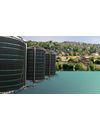
Fluence has decades of experience delivering sustainable water and wastewater solutions to communities large and small. Fluence has more than 30 years of experience in the design, construction, and operation of water and wastewater treatment plants for municipal clients, government entities, communities, emergency relief, and private use.
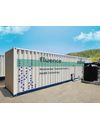
From cutting-edge MABR wastewater treatment to containerized desalination, Fluence delivers cost-effective and sustainable solutions for commercial customers worldwide. Fluence has more than 30 years of experience in the design, construction, and operation of water and wastewater treatment plants for commercial clients, including resorts, golf courses, commercial buildings, and campuses.
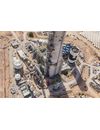
Fluence has decades of experience providing sustainable treatment solutions for power industry process water and effluent. Industrialization and population growth are spurring the demand for power around the world, putting pressure on fuel and water resources. At the same time, power producers face strict pollution and air-quality controls.

Sustainable Technologies for Treating Produced Water for Reuse or Deep Well Injection. Oil and gas exploration and production are highly complex and capital-intensive processes. Producers face many challenges, including the constraints of climate, environment, and geography. As companies extract oil and gas in areas that at one time were considered unpromising, water plays an ever more essential role.

Fluence has decades of experience delivering cost-effective and sustainable treatment solutions for a wide range of industries.
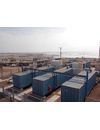
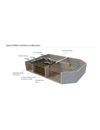
Fluence has more than 30 years of experience in the design, construction, and operation of water and wastewater treatment plants for municipal clients, government entities, communities, emergency relief, and private use. Fluence delivers decentralized, co
Fluence MABR (membrane aerated biofilm reactor) technology address the critical challenges of wastewater treatment plants for: nutrient reduction, high effluent quality, compliance with regulations, minimized energy consumption, at a small footprint, whil
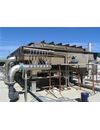
The main problems of wastewater treatment in poultry slaughterhouses are high energy consumption, high maintenance costs and complex treatment of highly contaminated wastewater. The objectives of wastewater treatment in slaughterhouses are to respect the legal limits, produce the minimum possible quantity of sludge and to recover the maximum possible quantity of energy. Fluence employs the following main technologies to design Waste & Wastewater treatment plants: DAF Dissolved Air Flotation: For the initial extraction of COD suitable for the anaerobic digestion Anaerobic digestion: For wastewater treatment and renewable energy generation Nitrification-denitrification process: For the final treatment of wastewater, in order to comply with regulations
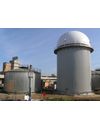
The "ideal" treatment of waste from beer (and not only) must respect the legal limits, produce the minimum possible quantity of sludge and recover the maximum possible amount of energy. Fluence offers an anaerobic solution on wastewater and sludge + aerobic wastewater treatment. The anaerobic solution uses a "Rapid" granular sludge digester. It is a digester in which a particular type of sludge capable of "granulating" grows and it is used for very low COD (> 2000 ֺmg / l) as long as the waste contains sugars or starches.
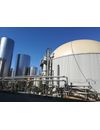
Dairy industry faces the challenge of the disposal of many by-products from the production process, such as Whey, Hot Whey, Buttermilk and cheese processing wastewater. Our cost-effective solutions allow taking advantage of all the by-products, which either are a cost or have low value, thanks to the generation of biogas. The most common treatments are either Anaerobic treatment only with a medium-low biological plant, or a Dissolved Air Flotation followed by a high load biological plant. The benefits are the on-site production of renewable energy, which can be used to reduce electricity and gas consumption; total enhancement of low-value by-products; Production of a high-quality digestate; decrease of the «Carbon Footprint» for wastewater treatment; improvement of the entire wastewater treatment process and reduction of the sludge volume by up to 90; discharge of high-quality treated effluents, in combination with a final aerobic treatment, which meet the most rigorous regulations.