
- Home
- Articles
Refine by
Environmental Industry Articles & Analysis: This-Year
367 articles found
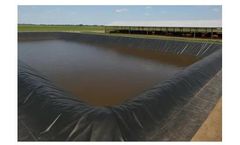
In modern livestock farming, environmental protection is essential. A large cattle farm faced the challenge of safely treating manure wastewater while complying with environmental regulations and preventing groundwater pollution. The farm operates wastewater ponds totaling over 200,000, requiring reliable seepage protection and a durable, economical lining system. After technical evaluation, the ...
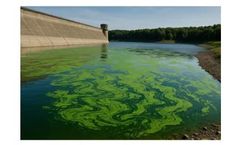
Water utilities in 2026 face accelerating operational pressures driven by climate volatility, regulatory tightening, and aging freshwater infrastructure. Seasonal planning and reactive treatment are no longer sufficient; utilities managing reservoirs and large surface water systems must confront risks that have built up over years. A unified, proactive approach is required to preserve drinking ...
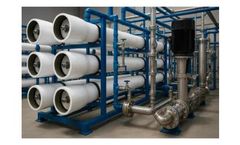
Industrial reverse osmosis (RO) concentrate and wastewater are subject to increasing regulatory and public scrutiny for dissolved solids, nutrients, and persistent contaminants. Fluence addresses these challenges through integrated system design and its Water Management Services (WMS) model, aligning treatment outcomes with site constraints, regulatory expectations, and lifecycle costs.RO Is Only ...
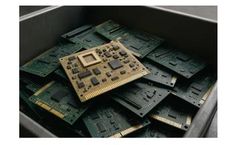
A real-world example demonstrates the value of precise metals grading in e-waste. An aggregate facility processed 40 tons of circuit boards and sold them to a bulk buyer for $32,000 at $800 per ton. By testing incoming material, the operations team estimated composition by device category—20% telecom infrastructure gear and 30% enterprise servers—and projected substantially higher values if the ...
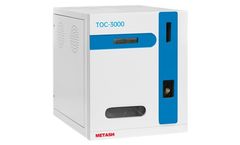
In 2026, China’s water quality monitoring framework has entered a pivotal stage. With stricter regulations under the revised Urban Sewage Treatment Plant Pollutant Discharge Standard and the newly implemented Ecological Environment Monitoring Regulation, the emphasis on ensuring safe and sustainable water use has never been stronger. Among various water quality indicators, total organic ...
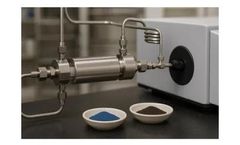
The study analyzes concurrent reactions that compete with the selective catalytic reduction of nitrogen oxides by ammonia (NH3-SCR), namely ammonia oxidation (AMO) and the formation of undesired by-products N2O and NO2, over Cu/SSZ-13 and Fe–Cu/SSZ-13 zeolite catalysts. It evaluates how the method of iron introduction and reaction conditions (dry vs. wet) influence catalytic activity, ...
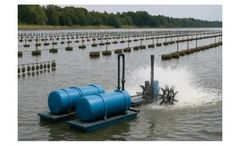
Oyster farming requires a clean water body that contains oxygen. However, coastal farms often experience low dissolved oxygen levels, which can reduce oyster growth and increase mortality and disease. Advanced oxygenation systems are being deployed to protect yield and improve water quality.Oyster Water Oxygenation and Disinfection Systems provide intelligent, rapid purification while maintaining ...
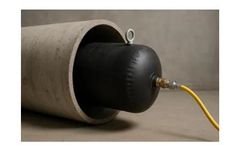
Plugs are used for temporary blocking, closing gravity pipelines, or for leakage tests of newly constructed pipelines. Correct plug selection in testing and temporary blocking operations is essential for test integrity and safety.1. Pipe Diameter and Plug SizingIf the plug will be used in multiple pipe diameters, a multi-size plug should be preferred.If the plug will be used in a single pipe ...
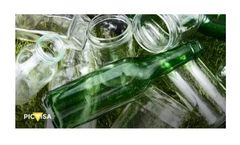
Glass recycling How recycling glassware benefits the environment Is glass the same as crystal? They are very different materials, although not everyone knows it. In fact, many people still throw light bulbs, broken glasses or perfume bottles into the glass container, which leads to errors in glass recycling. Understanding how to dispose of glassware or how to dispose of broken glass is key to ...
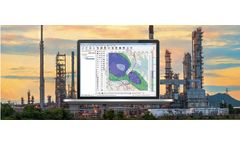
AERMOD outputs numeric results with up to 13 significant figures. When emission rates are very high or very low, values may not fit within this default range. Concentration values at or above about 1E9 units can cause the output to render as a field of asterisks, indicating an overflow. Concentrations near the default reporting threshold (1E-5) may yield repeating values such as 0.00000 or ...
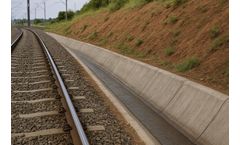
GCCM 5 MM was deployed in a railway project in Wardha, Maharashtra, to enhance drainage channel durability and erosion protection around embankments and track structures subjected to heavy rainfall and mechanical vibration.Project overviewLocation: Wardha, MaharashtraMaterial: Ocean Geosynthetic Cementitious Composite Mat GCCM 5 MMQuantity: 1,160 square metersObjective: provide a durable erosion ...
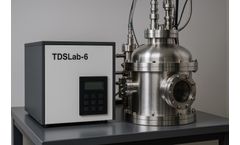
Hydrogen diffusivity measurements are critical for understanding embrittlement in materials exposed to hydrogen-rich environments. The TDSLab-6 system from Hiden Analytical, which integrates Isothermal Desorption Mass Spectroscopy (ITDMS), provides a precise method for these measurements and offers advantages over traditional electropermeation (EP) techniques. The system, formerly known as the ...
Executive Summary LiORA's comprehensive sensor monitoring system successfully enabled risk-based closure at a longstanding hydrocarbon-contaminated commercial site, demonstrating how continuous data collection can accelerate regulatory approval processes. Through the strategic deployment of soil and water sensors, LiORA provided definitive evidence of plume stability and natural source zone ...
ByLiORA
Executive Summary LiORA's integrated monitoring system successfully characterized the relationship between seasonal groundwater fluctuations and petroleum hydrocarbon concentrations at a former gas station site, providing critical insights for risk assessment and regulatory decision-making. By combining continuous contamination monitoring with groundwater level tracking, LiORA delivered the ...
ByLiORA
Executive Summary LiORA's comprehensive sensor network successfully characterized three distinct contamination plumes at varying depths within a large industrial facility that experiences extreme seasonal groundwater fluctuations of up to 50 feet. By deploying 20 water sensors across the complex site, LiORA provided critical insights into plume behavior under dynamic hydrogeological conditions, ...
ByLiORA
Executive Summary LiORA's sensor system for continuous monitoring of hydrocarbon depletion successfully supported regulatory approval for risk-based site management at a historical pipeline spill site in California. Through strategic deployment of soil sensors monitoring temperate, pressure, humidity, C02, CH4, 02, and hydrocarbon concentrations, LiORA provided real-time quantification of ...
ByLiORA
INTRODUCTION Environmental Material Science ("LiORA") provides a new generation of Internet of Things (loT) enabled non-dispersive infrared (NDIR) water sensors that provide high-resolution quantification of groundwater (GW) petroleum hydrocarbon (PHC) concentrations. The current generation water sensor transmits data at 30-minute intervals using a 4-channel pyroelectric NDIR detector, along ...
ByLiORA
Executive Summary Decades of site activities that reduced sources of hydrocarbons resulted in a complex picture of the contaminated groundwater plume. Now that immediate human and ecological health risks were addressed, the management team needed to determine if the groundwater plume was stable or if further remediation was needed to protect groundwater resources. LiORA Trends, utilizing ...
ByLiORA
Executive Summary LiORA's real-time soil sensor network successfully optimized SVE/MPE remediation system performance at a pipeline condensate release site, delivering $184,500 in operational cost savings while achieving significant environmental benefits. Through continuous monitoring of remedial progress, LiORA enabled data-driven system optimization, reducing operating costs by identifying ...
ByLiORA
Executive Summary LiORA's monitoring system successfully guided remediation decision-making at a contaminated site in an urban area, where historical impacts had migrated onto neighboring property near residential buildings. Through integrated soil and water monitoring, LiORA provided real-time assessment of remediation effectiveness and Natural Source Zone Depletion rates, enabling data-driven ...
ByLiORA