
Refine by
Health Safety Articles & Analysis: This-Year
322 articles found
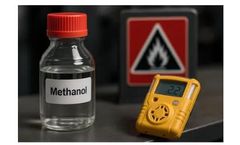
Methanol is increasingly attractive as a maritime fuel, offering significant reductions in NOx, SOx, and particulate emissions. With established infrastructure and ease of handling, it provides a practical pathway toward cleaner shipping.However, methanol introduces safety considerations. It is a highly flammable liquid with toxic properties, and its vapours can accumulate to create hazardous ...

Taste and odor in drinking water are persistent consumer concerns for utilities. They are driven by geosmin and MIB, naturally occurring compounds produced by algae in source water reservoirs. While not health hazards at typical concentrations, their sensory impact drives complaints and erodes trust, and conventional treatment often cannot fully remove them. Utilities are increasingly shifting to ...

Urban planning increasingly treats air quality as an infrastructure input, leveraging multi-source data to reduce exposure, bolster resilience, and guide investment in healthier, more equitable cities.Key data types and their valuePollutant concentration data: monitoring commonly tracked pollutants include PM2.5, PM10, NO2, O3, SO2, and CO. PM2.5 is particularly problematic due to its deep lung ...

The global hospitality sector wastes approximately 100 million tonnes of food annually, with waste streams spanning hotel buffets, restaurant portions, and spoilage. This waste incurs direct costs of around €300 million each year and drives greenhouse gas emissions through landfill methane. As Ireland pursues a target to halve food waste by 2030 under the UN Sustainable Development Goals, the ...
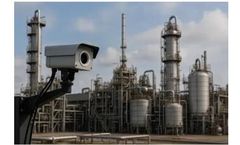
The energy sector faces escalating regulatory scrutiny and mounting operational complexity. Traditional LDAR relies on labor-intensive, periodic manual monitoring, creating gaps in fugitive methane management. This shift toward fixed Optical Gas Imaging (OGI) technology augmented by Artificial Intelligence (AI) enables autonomous, continuous vigilance, establishing an unblinking safety ...
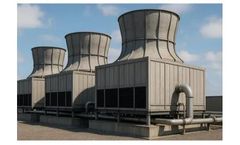
Cooling towers remove heat from water systems to keep buildings comfortable, but warm water promotes Legionella growth and the potential for legionnaires’ disease. Effective prevention relies on engineering controls, reliable operation, and consistent maintenance to minimize risk in daily operations.Why cooling towers pose a Legionella riskWarm water can sustain Legionella within certain ...
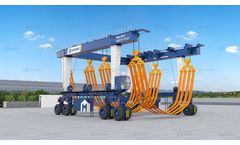
Travel lifts are essential equipment in marine environments for lifting and transporting boats, yachts, and vessels of all sizes within shipyards, marinas, boatyards, and docks. These machines operate in some of the harshest conditions where saltwater, humidity, sunlight, wind, mechanical wear, and chemical exposures can quickly degrade unprotected steel and metal components.A key factor that ...
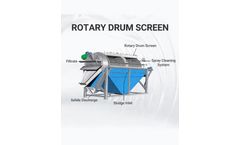
Rotary Drum Screen Guide for Wastewater and Industrial Filtration In many filtration systems, performance problems are often traced back to the screening stage rather than downstream equipment. When solids are not removed efficiently at the beginning of the process, it can lead to clogging, reduced efficiency, and increased maintenance costs. One solution widely used across industries is the ...
Measure Volume in a Wedge or Pie-Shape Silo For operators, having accurate data about the amount and dollar value of material on hand can help reduce safety stock, increase inventory turns, and pay for itself by freeing up spend that could be tied up in inventory. Operations that manage inventory in pie-shaped silo segments now have a solution that provides accurate volume data thanks to the ...
Inventory mistakes are amplified when errors accumulate and impact corporate financial statements. Storing inventory that you cannot see—such as in bins and silos—can be particularly risky if manual measurements and estimations are the basis for calculating inventory value. Bulk solid inventory is handled in several ...
The cost of storing materials—along with related salaries, transportation, handling, taxes, insurance, depreciation, and shrinkage—could add up to 10-30% of total inventory costs, according to Investopedia. ...
As bulk material management continues its digital transformation, industries are turning to sensors and weighing systems to eliminate manual measurements and streamline production. However, when accuracy is insufficient, operators face major obstacles: financial disparities, underutilized storage capacity, frequent downtime, and weak ...

Waste management has long been a significant environmental challenge, with numerous methods employed to dispose of or recycle waste materials. Two of the most commonly discussed technologies for waste treatment are pyrolysis and traditional incineration. While both processes are designed to manage waste effectively, they differ considerably in their environmental impact, efficiency, and ...
Organizations face a storm of challenges: the strain of product demand, limited supply chain resources, and an unprecedented exodus of people leaving the workforce. Thankfully, Industry 4.0 technology and systems provide some ...
Workforce shortages in the U.S. have sparked great energy toward technology. The urgency to implement automated work processes continues to ...
The University of Nebraska-Omaha operates one of the state’s few programs dedicated to supply chains. Steve Schulz, Ph.D., Associate Professor of Logistics & Supply Chain Management, said the program focuses on all the latest innovations regarding supply chain technology. ...

The scale, cost, and impact of food waste across European supply chains is increasingly recognised as a structural inefficiency. From production and processing to retail and hospitality, waste streams are substantial with significant environmental and economic consequences.EU data indicate roughly 59 million tonnes of food waste are generated each year, equating to about 131 kg per person. The ...

The Problem: The company manufactures various types of fasteners for the aerospace industry. In the process of manufacturing, several waste streams are generated that contain oil, various metals, and solids. In order to save operating costs in the form of hauling charges, The company needed a way to treat the waste streams to allow for discharge to the local POTW. They also required to treat two ...
Industrial water pollution is a widespread problem throughout the planet. When harmful chemicals and compounds are discharged into water, the water becomes unsuitable for drinking and other uses. Although most of the Earth’s surface is covered by water, we can only obtain fresh water from water bodies such as ponds, lakes, rivers, streams, and reservoirs. This means that it’s in our ...
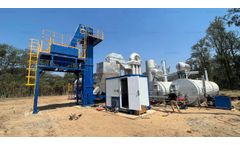
Facing tighter environmental and energy‑saving mandates, the central claim is that the asphalt drum mix plant manufacturer is focusing upgrades that directly lower emissions, reduce fuel consumption, and improve material efficiency—changes that increase the aftermarket value of asphalt plants for sale. Buyers should evaluate specific retrofits and factory configurations that target ...
ByMacroad