
- Home
- Articles
Refine by
Environmental Industry Articles & Analysis: This-Year
531 articles found
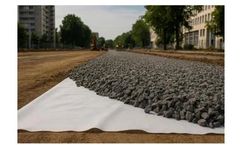
Urban redevelopment in constrained urban environments requires geosynthetics to stabilize soils, improve drainage, and support long-term infrastructure performance. Non woven geotextiles provide filtration, separation, and reinforcement within pavement systems and foundation layers. This case study examines the deployment of Ocean Non Woven Geotextile 150 GSM (Polyester) in the NBCC Sarojini ...

Black carbon emitted during automotive manufacturing can accumulate within facilities, presenting operational challenges and broader environmental concerns. Traditional emissions testing and stack measurements offer limited real-time visibility and may not capture short-term fluctuations or localized deposition on the shop floor.Real-time monitoring and high-resolution air quality data enable ...
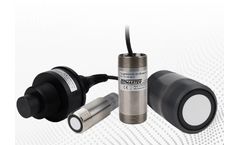
As climate change continues to disrupt global weather patterns, the frequency and severity of flood events have increased dramatically. Floods not only threaten lives and property, but also impact infrastructure, agriculture, and economic activity on a large ...
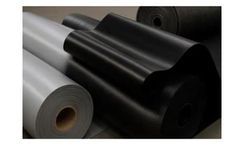
Geomembranes are waterproof barrier materials derived from high-molecular-weight polymers, designed to meet project-specific containment and durability requirements. Polymer geomembranes are the dominant category in current practice, with asphalt geomembranes used in composite configurations where appropriate.Geomembrane TypesPolymer (Synthetic) Geomembranes: This category currently dominates the ...
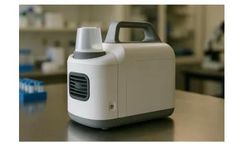
The Coriolis Compact is a lightweight, battery-operated air sampler designed to capture bioaerosols directly in the environment, delivering samples fully compatible with PCR, culture, and sequencing workflows, with no liquid media required on-site.Independent validations span four distinct environments: SARS-CoV-2 detection in indoor settings, H5N8 avian influenza monitoring on poultry farms, ...
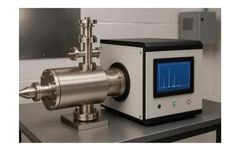
Hiden Analytical's Dual Zone mass spectrometry combines high-resolution mass separation with accurate partial-pressure measurement in a single instrument, addressing the challenge of separating species that share the same nominal mass in gas analysis. Systems such as HAL 101 X, DLS-20 and DLS-2 / DLS-2X enable this capability across vacuum science, materials research, catalysis and nuclear fusion ...
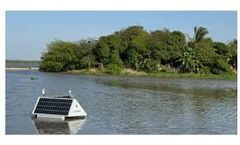
Triple A S.A. E.S.P., the utility supplying drinking water to approximately 15 municipalities in the Barranquilla region, has installed two MPC-Buoys at the Dársena Río Magdalena, a river intake on the Magdalena River, to address algae at the source before treatment.Context: Algae risk at river intakesThe Magdalena River is Colombia's primary freshwater source for Barranquilla and surrounding ...
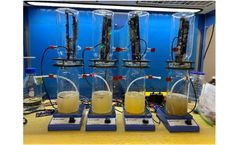
INTRODUCTION Environmental Material Science ("LiORA") provides a new generation of Internet of Things (loT) enabled non-dispersive infrared (NDIR) water sensors that provide high-resolution quantification of groundwater (GW) petroleum hydrocarbon (PHC) concentrations. The current generation water sensor transmits data at 30-minute intervals using a 4-channel pyroelectric NDIR detector, along ...
ByLiORA
The cost of storing materials—along with related salaries, transportation, handling, taxes, insurance, depreciation, and shrinkage—could add up to 10-30% of total inventory costs, according to Investopedia. ...
Today's cloud-based programs are compatible with a wide range of sensors and measurement technologies. Their versatility lends them to be used with bins, tanks, or silos of different shapes and sizes, storing all types of grain, ingredients, or ...
Inventory mistakes are amplified when errors accumulate and impact corporate financial statements. Storing inventory that you cannot see—such as in bins and silos—can be particularly risky if manual measurements and estimations are the basis for calculating inventory value. Bulk solid inventory is handled in several ...
Measure Volume in a Wedge or Pie-Shape Silo For operators, having accurate data about the amount and dollar value of material on hand can help reduce safety stock, increase inventory turns, and pay for itself by freeing up spend that could be tied up in inventory. Operations that manage inventory in pie-shaped silo segments now have a solution that provides accurate volume data thanks to the ...
Not long ago, bulk material management involved dirty clipboards and measuring tapes to track grain, plastic, or cement inventory stored in a bin or silo. Enter digital transformation. Organizations continue to embrace digital transformation to replace antiquated processes using high-tech instruments like BinMaster level sensors and accompanying software. ...
The University of Nebraska-Omaha operates one of the state’s few programs dedicated to supply chains. Steve Schulz, Ph.D., Associate Professor of Logistics & Supply Chain Management, said the program focuses on all the latest innovations regarding supply chain technology. ...

The global plastic waste crisis is worsening at an alarming rate—each year, over 360 million tons of plastic is produced worldwide, yet only 9% is effectively recycled, according to recent statistics. A staggering 79% ends up in landfills, oceans, or natural environments, polluting ecosystems and threatening sustainable development. Traditional mechanical recycling, which relies on melting ...
Temperatures Drop. Moisture Rises. Chutes Plug. According to Sukup Manufacturing, a plugged bin or chute costs one facility $50,000 a day in lost production and labor. In mining, blocked chutes are responsible for about 60% of conveyor-related accidents, per the Australian Mine Safety Journal. ...
Workforce shortages in the U.S. have sparked great energy toward technology. The urgency to implement automated work processes continues to ...
Organizations face a storm of challenges: the strain of product demand, limited supply chain resources, and an unprecedented exodus of people leaving the workforce. Thankfully, Industry 4.0 technology and systems provide some ...
As bulk material management continues its digital transformation, industries are turning to sensors and weighing systems to eliminate manual measurements and streamline production. However, when accuracy is insufficient, operators face major obstacles: financial disparities, underutilized storage capacity, frequent downtime, and weak ...
The scale, cost, and impact of food waste across European supply chains is increasingly recognised as a structural inefficiency. From production and processing to retail and hospitality, waste streams are substantial with significant environmental and economic consequences.EU data indicate roughly 59 million tonnes of food waste are generated each year, equating to about 131 kg per person. The ...