


Ideal Water Treatment Systems products
Industrial Treatment Systems
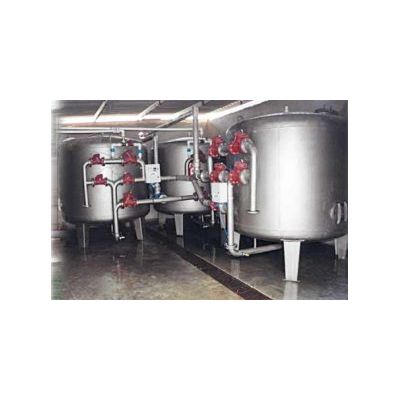
Industrial Water Softening Systems
Softening: It is the removal of hardness in water caused by calcium and magnesium ions using cationic resin. Hard water causes calcification on the surfaces of steam cauldrons, heaters and hot water installations. This way their cross-section get narrower, important transfer losses and energy consumption occur.
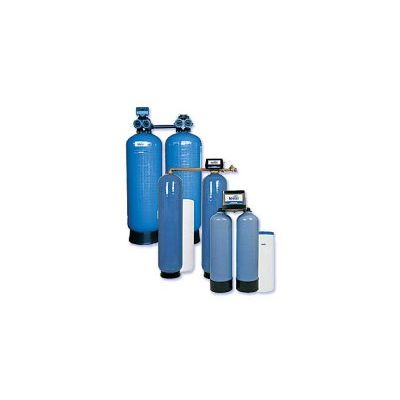
Tandem Softening Systems
Softening: It is the removal of hardness in water caused by calcium and magnesium ions using cationic resin. Hard water causes calcification on the surfaces of steam cauldrons, heaters and hot water installations. This way their cross-section get narrower, important transfer losses and energy consumption occurs. AST Series tandem softening systems are designed for continuous soft water need of businesses.
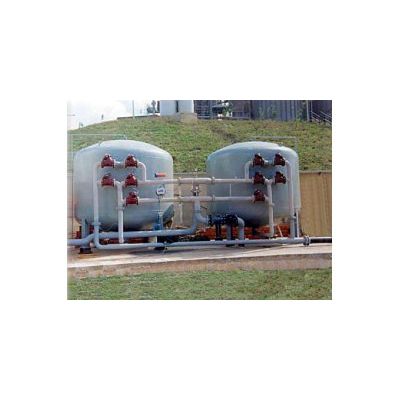
Industrial Sediment Filtration Systems
Sediment: It is the clay, mud and all other pollutants that are inorganic and spoil the color of water. DOF Series sediment filters are used in the treatment of process water of industries that need high capacity water and in obtaining drinkable water for towns and villages.
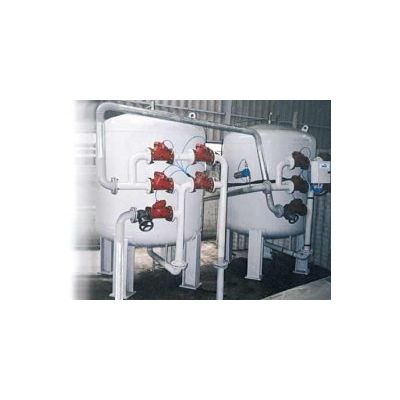
Model DOC Series - Automatic Activated Carbon Filtration Systems
Activated Carbon: They are usually organic based coals activated particularly by burning coconut under 800°C vapour in the absence of smoke. Activated carbon removes smell, taste and color problems caused by organic substances. It adsorbes substances like chlorine, chlorine compounds, detergent, petroleum, industrial wastes, solvents and asbestos.
Advanced Treatment Systems
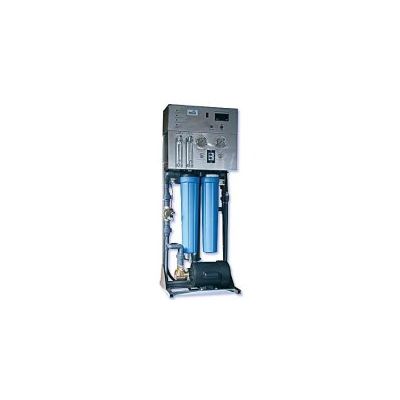
Commercial Reverse Osmosis Systems
Osmosis: It is the transmission of water without an external force, from a less dense medium to a denser medium through a semi-permeable membrane. For example plants get water from soil and transfer up to the leaves according to the osmosis principle by the help of the semi-permeable membrane.
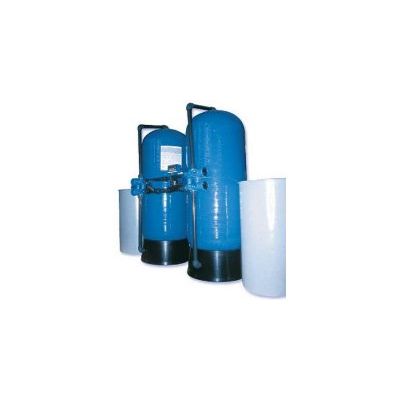
Deionization Systems
The conductivity of water arise from the ions dissolved in water. This also determines the purity rate of water. Pure water is insulator and does not contain any dissolved substances. But in practice it is not possible to obtain pure water. The term `deionized water` is used to express water containing the least quantity of ions. Ideal deionization systems are especially designed in three different series for the industries like pharmaceutical, cosmetics, chemistry, accumulator, and electronics taking into consideration their process water sensitivity.
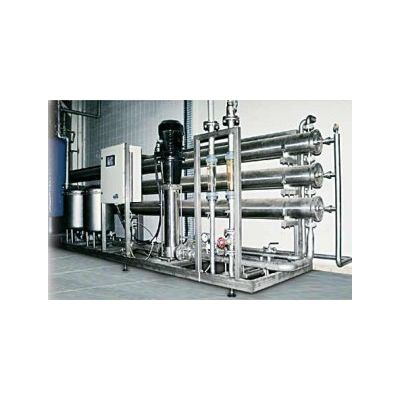
Industrial Reverse Osmosis Systems
Reverse osmosis systems are todays` most recent and rapid developing water treatment technology. In the previous years, as R.O. systems were so new and expensive, they were only used in waterless districts to obtain drinkable water from sea water and in industries like medicine and cosmetics which derive high quality water. But today, as their operating systems are simplified and their prices became affordable, the usage of RO systems are spreaded.
Sterilization Systems
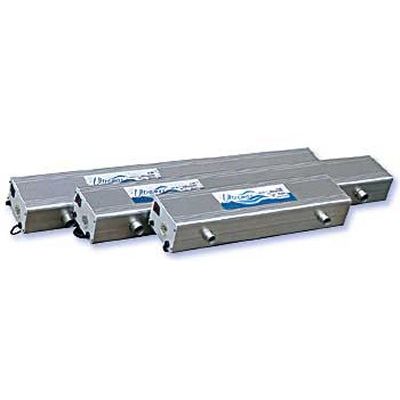
ULTRAMAX - Model C and S Series - Ultraviolet Water Sterilization Systems
Sterilization: It is the process of killing microorganisms found in water and air by destroying their DNA structure. In water treatment, sterilization can be done in many different ways. However, ultraviolet ray sterilization is the only system that has no side effects as it doesn`t require any chemicals. Today, result of experiments confirm that rays in UV-C band with 254 nm wavelength kill microorganisms by destroying their DNA structure. UV-C rays are produced by special fluorescent type tubes made of quartz glass and filled with mercury vapour.
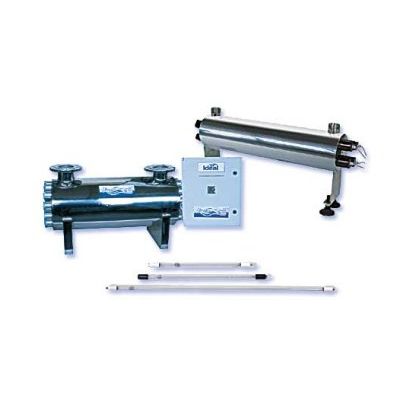
ULTRAMAX - Model HC Series - Industrial Ultraviolet (UV) Sterilization Systems
Ultramax HC Series devices are designed as functional and multi-lamp combined systems for the industrial plants and businesses which use water with high rate of flow.
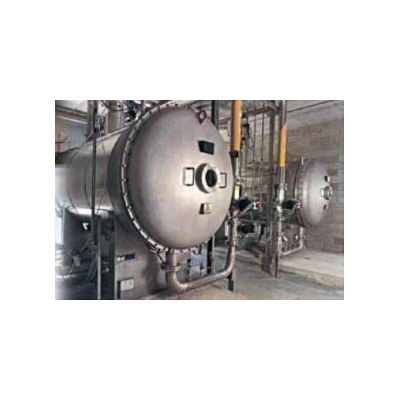
Ozone Sterilization Systems
Ozone (03) is derived from the oxygen in the air or from pure oxygen. There are two widely known methods to produce ozone. First one is the transmission of oxygen molecules to ozone by passing them through the corona sparks formed under high voltage. This is the most valid way to produce high amount of ozone. Thunderbolt arcs are also an important source in the formation of ozone in the atmosphere. The second method is the ozone production by UV rays. The rays spread out by UV lambs seperate some of the oxygen molecules in air current to form ozone.