
- Home
- Articles
Refine by
Environmental Industry Articles & Analysis
67,828 articles found
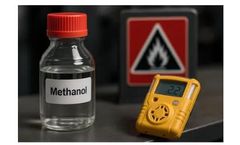
Methanol is increasingly attractive as a maritime fuel, offering significant reductions in NOx, SOx, and particulate emissions. With established infrastructure and ease of handling, it provides a practical pathway toward cleaner shipping.However, methanol introduces safety considerations. It is a highly flammable liquid with toxic properties, and its vapours can accumulate to create hazardous ...
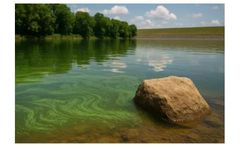
Taste and odor in drinking water are persistent consumer concerns for utilities. They are driven by geosmin and MIB, naturally occurring compounds produced by algae in source water reservoirs. While not health hazards at typical concentrations, their sensory impact drives complaints and erodes trust, and conventional treatment often cannot fully remove them. Utilities are increasingly shifting to ...

Urban planning increasingly treats air quality as an infrastructure input, leveraging multi-source data to reduce exposure, bolster resilience, and guide investment in healthier, more equitable cities.Key data types and their valuePollutant concentration data: monitoring commonly tracked pollutants include PM2.5, PM10, NO2, O3, SO2, and CO. PM2.5 is particularly problematic due to its deep lung ...

The global hospitality sector wastes approximately 100 million tonnes of food annually, with waste streams spanning hotel buffets, restaurant portions, and spoilage. This waste incurs direct costs of around €300 million each year and drives greenhouse gas emissions through landfill methane. As Ireland pursues a target to halve food waste by 2030 under the UN Sustainable Development Goals, the ...
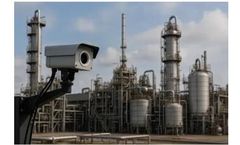
The energy sector faces escalating regulatory scrutiny and mounting operational complexity. Traditional LDAR relies on labor-intensive, periodic manual monitoring, creating gaps in fugitive methane management. This shift toward fixed Optical Gas Imaging (OGI) technology augmented by Artificial Intelligence (AI) enables autonomous, continuous vigilance, establishing an unblinking safety ...
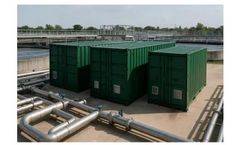
Utilities face a challenging balancing act: expanding wastewater treatment capacity to meet uncertain future demand while avoiding premature, capital-intensive overbuilds. Phased, containerized MABR-based expansion allows utilities to add capacity in stages as needs arise, reducing long-term risk and preserving capital for other priorities.Historically, communities plan for future needs at ...
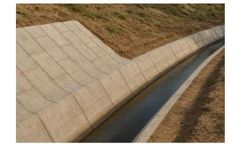
GCCM offers a durable, installation-friendly alternative to traditional concrete lining for slope erosion control and drainage channel protection. In Jaipur, the Venus Capital Hike Project deployed Ocean Geosynthetics GCCM 9 MM to shield slopes and drainage channels from rainfall runoff and environmental stress. The project used a total of 200 SQM of GCCM material, selected for its combined ...
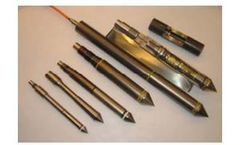
A comprehensive discussion of the technical aspects of the Cone Penetration Test method and the principles and methods for interpreting these soundings. This monograph includes a range of interpretation methods that allow for the estimation of a number of basic geotechnical ...
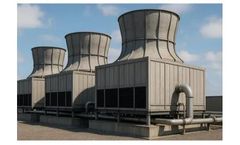
Cooling towers remove heat from water systems to keep buildings comfortable, but warm water promotes Legionella growth and the potential for legionnaires’ disease. Effective prevention relies on engineering controls, reliable operation, and consistent maintenance to minimize risk in daily operations.Why cooling towers pose a Legionella riskWarm water can sustain Legionella within certain ...
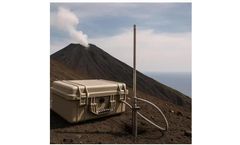
Stromboli Island hosts one of the world’s most monitored volcanoes, equipped with a comprehensive multi-parameter surveillance system for 24/7 monitoring, early warning of eruptions, and detection of slope failures with potential tsunami generation. Real-time, high-frequency gas measurements enable detection of subtle shifts in CO2 flux and gas ratios that may reflect magma ascent, ...
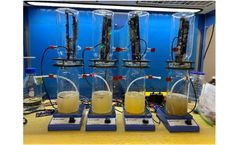
INTRODUCTION Environmental Material Science ("LiORA") provides a new generation of Internet of Things (loT) enabled non-dispersive infrared (NDIR) water sensors that provide high-resolution quantification of groundwater (GW) petroleum hydrocarbon (PHC) concentrations. The current generation water sensor transmits data at 30-minute intervals using a 4-channel pyroelectric NDIR detector, along ...
ByLiORA

Business intelligence for scientists: more than data dashboards When people talk about business intelligence tools, they often think of sales teams or finance departments. But what if you're a scientist managing complex environmental projects? Scientists running consulting or engineering firms face a different challenge. You need clarity, not complexity. You want to manage time, budgets, and ...
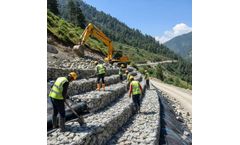
Introduction Mountainous terrains pose some of the toughest challenges for civil and geotechnical engineers. From slope instability to erosion control, every project in such regions demands advanced engineering solutions that balance safety, sustainability, and cost efficiency. The Himalayan region, particularly around Srinagar (Jammu & Kashmir), is highly prone to landslides and soil ...
Discover the top water tech trials bottlenecks that derail innovation, and learn practical ways to avoid them. This is the second of a three-part blog series on how the Trial Reservoirs Initiative is helping accelerate tech adoption in the water sector and beyond. Want to steal our model? Find out how in our first blog, here. The global water industry is experiencing a boom in tech trials ...

The transformation of demolition debris into a marketable commodity represents one of the most compelling economic alchemies of the modern construction era. Where once mountains of concrete rubble, brick masonry, and asphalt millings were viewed as a costly disposal problem—requiring fleets of haul trucks and escalating landfill levies—they are now recognized as a feedstock of genuine value. At ...
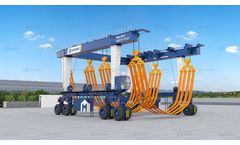
Travel lifts are essential equipment in marine environments for lifting and transporting boats, yachts, and vessels of all sizes within shipyards, marinas, boatyards, and docks. These machines operate in some of the harshest conditions where saltwater, humidity, sunlight, wind, mechanical wear, and chemical exposures can quickly degrade unprotected steel and metal components.A key factor that ...
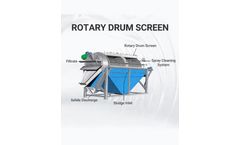
Rotary Drum Screen Guide for Wastewater and Industrial Filtration In many filtration systems, performance problems are often traced back to the screening stage rather than downstream equipment. When solids are not removed efficiently at the beginning of the process, it can lead to clogging, reduced efficiency, and increased maintenance costs. One solution widely used across industries is the ...
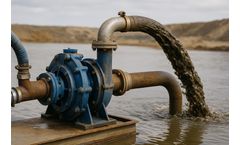
In pontoon dredging, the gap between test-based pump curves and field results is a common source of underperformance. The operating point is defined by the intersection of the pump curve and the system curve, which reflects the dredge layout, hose routing, elevations, and slurry characteristics—not brochure values alone. What a Pump Curve Really Tells You (and What It Doesn’t) A pump curve ...
Not long ago, bulk material management involved dirty clipboards and measuring tapes to track grain, plastic, or cement inventory stored in a bin or silo. Enter digital transformation. Organizations continue to embrace digital transformation to replace antiquated processes using high-tech instruments like BinMaster level sensors and accompanying software. ...
Measure Volume in a Wedge or Pie-Shape Silo For operators, having accurate data about the amount and dollar value of material on hand can help reduce safety stock, increase inventory turns, and pay for itself by freeing up spend that could be tied up in inventory. Operations that manage inventory in pie-shaped silo segments now have a solution that provides accurate volume data thanks to the ...